
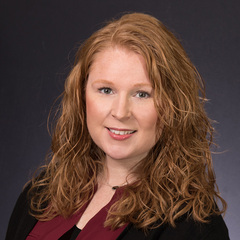
Crysta Guzman
Sr. Environment & Development Planner, North Central Texas Council of Governments
- Fort Worth, TX
- US
The programs I currently lead include NCTCOG's Regional Stormwater Management Program and the Regional Energy Management Program which focuses on energy/water management and efficiency. My work also touches on sustainability practices in general. In the recent past, I've also supported our waste management program through the management of pass-through grant projects and worked on an EPA Trash Free Waters grant. While I mainly coordinate with and support local governments and regional entities, I do have some public facing outreach and education programs which I find highly rewarding.
2 Recommends
-
Five ways to boost e-waste recycling
2024-03-25 13:11:45 UTC
Hi all, With the fast pace of technology and increased demand for electronics around the world, electronic waste is a growing threat to the environment and global health. Over 50 million tonnes of e-waste is generated annually, with only about one fifth of that being recycled. As a result, e-waste is now the fastest growing waste stream on the planet. If you are looking for solutions to this problem in your area, consider the World Economic Forum’s five suggestions for increasing e-waste recycling rates: 1. Repair and reuse cafés Many households may have broken appliances or electronic devices laying around that could be brought to a repair café, where skilled volunteer repairers help people extend the life of their products. These repair cafés exist and have been around for many years in parts of Europe and North America. There is demand for this. According to a 2018 European Union survey, nearly two-thirds of Europeans would rather repair products than buy new ones. Reach out to me if you have questions about leading an initiative like this, as I have experience leading repair cafés in a university setting. 2. Manufacturer responsibility At regional and state levels, legislation can be put in place to make sure that manufacturers are responsible for the costs and logistics related to the end-of-life collection and recycling of their products. If you are working for a municipality, it would be best to join with other cities to advocate for legislation such as this. Other jurisdictions, such as Singapore, have already implemented this kind of legislation. 3. Combining apps and incentives Create an app that enables people to take photos of their unwanted appliances and devices to find out the best place to recycle them. The Egyptian government has launched an app such as this, while also partnering with companies so that citizens can exchange their unwanted appliances and devices for vouchers that allow them to purchase new electronics at participating stores. 4. Colourful collections To divert waste that ends up in regular recycling streams, some municipalities have created dedicated bins in their urban area where citizens can drop off e-waste. The City of Cambridge in the UK, for example, has bright pink recycling bins for this purpose. Since 2022, around 49 tonnes of small electrical appliances have been deposited into these eye-catching bins. It is important here to note that these bins must be placed in an area that is convenient for people to access. 5. Partnership development Consider partnering with organizations or companies who find value in the minerals that are inside electronic devices. For example, the Royal Mint, that produces coins for the UK and many other nations, is developing a new process to reclaim gold and other precious metals from discarded electronics. They are partnering with Canadian researchers on this process, which can extract 99% of the gold found on circuit boards in laptops, cell phones, and other devices. For more details on these e-waste solutions, you can visit the World Economic Forum’s website here. -
A Response to Bill Gates’ Climate Memo
2025-12-01 13:41:21 UTC
Hi all,
In the lead up to the United Nations’ COP30 climate change conference in Brazil this November, Bill Gates published a memo stating what he wanted everyone at the conference to know. Brett Jenks, CEO of Rare, agreed with most of what Gates said, but believes that he left a lot out. Here are four things that Jenks would add:
1. Yes, we need to focus more on adaptation. On a global scale, we have not prioritized climate resilience and adaptation. The United Nations recently released a report demonstrating that there is an enormous adaptation funding gap. Only a small amount of global philanthropy goes toward climate change, and an even smaller amount reaches communities that are least responsible but most impacted.
2. And, we need to do both adaptation and mitigation. If you’re in a sinking rowboat, you need to plug the hole AND bail the water. There’s no question that we need to assist people and ecosystems in adapting to climate change, but we cannot ignore the relationship between climate disaster and the emissions that fuel it. Emissions must continue to come down.
3. Yes, put people at the core of our strategies. Conservation is at its essence about people, enabling and empowering them to change their behaviors so that people and nature can thrive.
4. And, we need to invest in nature, not just technology. Gates seems to believe that technological innovation will be our savior in terms of solving climate change. While technology has it place, it is not enough. We must also invest in nature. According to Jenks, “nature is our best ally in tackling climate change and Gates didn’t even mention it”. From the mangroves of Brazil’s Amazon Coast to the reefs of the Coral Triangle, when nature is healthy, it makes us all resilient and ensures food security and livelihood for people living in poverty, which Gates highlighted.
Overall, Jenks calls for a bigger funding pie that gets resources to frontline communities and ensures nature-based solutions to the climate crisis.
To read Brett Jenks’ full response, click here. -
Cognitive biases and how to address one of them
2025-09-22 12:40:13 UTC
Hi all,
We all have cognitive biases. What are they? Cognitive biases are errors in thinking that influence how we process information and make decisions, often leading to irrational judgments. They emerge from mental shortcuts, or heuristics, that simplify complex information but can result in inaccurate perceptions of reality.
One such cognitive bias is called present bias. Present bias is the tendency to settle for smaller immediate rewards over larger future rewards, often leading to impulsive decisions that can negatively impact long-term outcomes. We observe present bias in various life situations, including environmental, health, and financial decisions, where individuals prioritize short-term benefits over long-term consequences. Sustainable farming in the U.S. is one area where we see present bias at play. Farmers there are struggling to adopt the practice of cover cropping, which involves planting crops as a groundcover to control weeds and pests. The practice is very good for the environment, with reduced soil erosion and improved water quality. It is also good for farmers economically, but the upfront cost is high, and the payout takes several years. As one Iowa farmer put it, “Why would I pay $30 or $40, to put a cover crop out there and have no specific line item, [no] quantifiable benefit for them next year?”
There are a few elements to consider when countering the allure of immediate costs and benefits. When dealing with long-term time horizons, deliberately practicing delayed gratification by focusing on long-term rewards can be helpful. As practitioners, you know that enhancing benefits and diminishing barriers are effective. Emphasize future gains and then help people to set and reach their goals along the way. When it comes to health and finance goals, for instance, consider helping your target audience to automate their behaviors in order to rely less on willpower. Social diffusion can also be useful here. In the case of sustainable farming in the U.S., encouraging early adopters of cover cropping to speak to their peers about this practice can show leadership and influence those who are hesitant.
To learn more about present bias, click here. To learn more about behavioral insights as they relate to sustainable farming, click here -
Emphasizing the Co-benefits of Climate Action
2025-07-28 12:32:47 UTC
Climate change is a tremendous, abstract, and seemingly distant problem, and much of the time, policymakers and practitioners focus on the threat it poses. This ‘doom and gloom’ narrative does not help us to move the needle on climate change as we might hope. Instead, we would be better off emphasizing the co-benefits of climate action. This will help mobilize more people to participate in climate mitigation and adaptation efforts, both collectively and individually. What are co-benefits? They are “the positive, sometimes unintended, outcomes that arise from sustainability initiatives that go beyond their primary environmental goals”. These could be things like improved public health, green jobs, and financial savings. The idea is to motivate people by drawing their attention to a benefit that is tangible and relatable to them. As I have mentioned in the past, presenting clear benefits to a target audience/priority group is a statistically significant way to achieve successful program outcomes. And this aligns with the second step of CBSM: Identifying barriers & benefits. Here are some examples of co-benefits, to show you what I mean: - Improving energy efficiency of our homes saves money- Driving electric vehicles reduces air pollution- Cycling and walking more reduces pollution and improves our health- Eating a plant-based diet reduces our risk of heart disease and certain types of cancer All of these are examples of ways we can address climate change, but the way they are framed is that they will improve our quality of life in some way. This is much more effective than the current narrative, which presents climate action as a series of disruptions to our comfortable lifestyle, and a burden on society. While global leaders struggle to frame climate action in terms of co-benefits, some cities are doing better. Networks such as C40 are making co-benefits a core part of their climate action plans. Also, the 2020 Carbon Disclosure Report that includes data from cities all over the world, demonstrated that on average, cities that listed co-benefits of climate action reported over twice as many mitigating actions as cities that did not. To read more about co-benefits, consider reading the Behavioral Scientist article here or The Conversation article here. -
BEARhub: Free Advice for Energy-related Challenges
2025-07-07 12:30:32 UTC
Hi all, If you are running an energy program in the United States and need free behavioral science advice, you might consider working with the BEARhub. BEAR stands for Behavior, Energy, Action, and Research. The BEARhub applies behavioral science knowledge to enhance energy program success in three key areas: transportation, buildings, and industry. Whether you are aiming to boost program participation, increase heat pump adoption, reduce single-occupancy vehicle travel, or shift how people engage with your program, the BEARhub can help you achieve success. The type of support that is offered can range from a few targeted recommendations to a 4- to 6-month collaboration. The main process looks like this: - Tell them about your challenge (complete intake form)- Meet with experts (free consultation)- Get research-backed guidance (tailored recommendations)- Implement strategies (ongoing support) More specifically, they work closely with cities, utilities, non-profits, and others to: - Identify key behavioral challenges in their programs- Pinpoint barriers and opportunities using behavioral science insights- Design solutions to test, from messaging strategies to program design- Support implementation by troubleshooting throughout the process- Evaluate what works, suggesting strategies to assess impact
If this interests you, consider applying for assistance. It appears that they have already finished accepting applications for the founding cohort, but they are still accepting applications on a rolling basis, with a delay of 1-2 months to review new applications. Keep in mind that the most important requirement is having a specific behavior you want to influence as part of your program goal. Click here to learn more and/or to apply.
Messaging 0 colleagues
